Start with the sidewall
Enter the full size printed on each tire. Prefixes P and LT are accepted; load and speed ratings are separate.
Convert one size or compare two. Check dimensions, speedometer changes, wheel positions and nearby sizes in one place.
Both tires shown at the same scale. Nominal dimensions. Photorealistic illustration; tread and wheel design are generic.
Swipe the table to see every measurement and change.
| Measurement | A · 275/60R20 | B · 285/60R20 | Change |
|---|---|---|---|
| Overall diameter | 32.99 in83.80 cm | 33.46 in85.00 cm | +0.47 in+1.20 cm |
| Section width | 10.83 in27.50 cm | 11.22 in28.50 cm | +0.39 in+1.00 cm |
| Sidewall height | 6.50 in16.50 cm | 6.73 in17.10 cm | +0.24 in+0.60 cm |
| Circumference | 103.65 in263.27 cm | 105.13 in267.04 cm | +1.48 in+3.77 cm |
| Wheel diameter | 20.00 in50.80 cm | 20.00 in50.80 cm | 0.00 in0.00 cm |
| Revolutions / mi | 611.3 | 602.7 | -8.6 |
Assumes the speedometer was calibrated for the original tire. Real rolling circumference varies.
| Indicated speed (mph) | Estimated actual speed (mph) | Actual minus indicated (mph) |
|---|---|---|
| 20.0 | 20.3 | +0.3 |
| 30.0 | 30.4 | +0.4 |
| 40.0 | 40.6 | +0.6 |
| 50.0 | 50.7 | +0.7 |
| 60.0 | 60.9 | +0.9 |
| 70.0 | 71.0 | +1.0 |
| 80.0 | 81.1 | +1.1 |
| 90.0 | 91.3 | +1.3 |
Uses the same original-tire calibration for the odometer. Distances are estimated from the nominal circumference ratio.
Enter the existing final-drive ratio to see the gearing change.
Uses the same transmission gear and nominal tire diameter. The restore value is a theoretical ratio to compare with available gearing.
Enter wheel width, offset and spacer thickness for each setup.
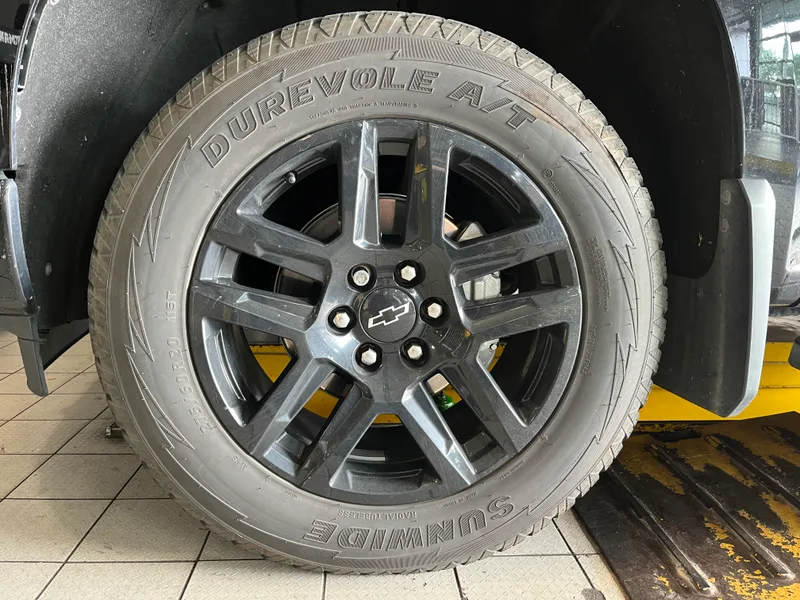
Installed 275/60R20 115T tire shown as a reference.
The size code gives the dimensions. These reference images show tread patterns, sidewall details and wheel designs.
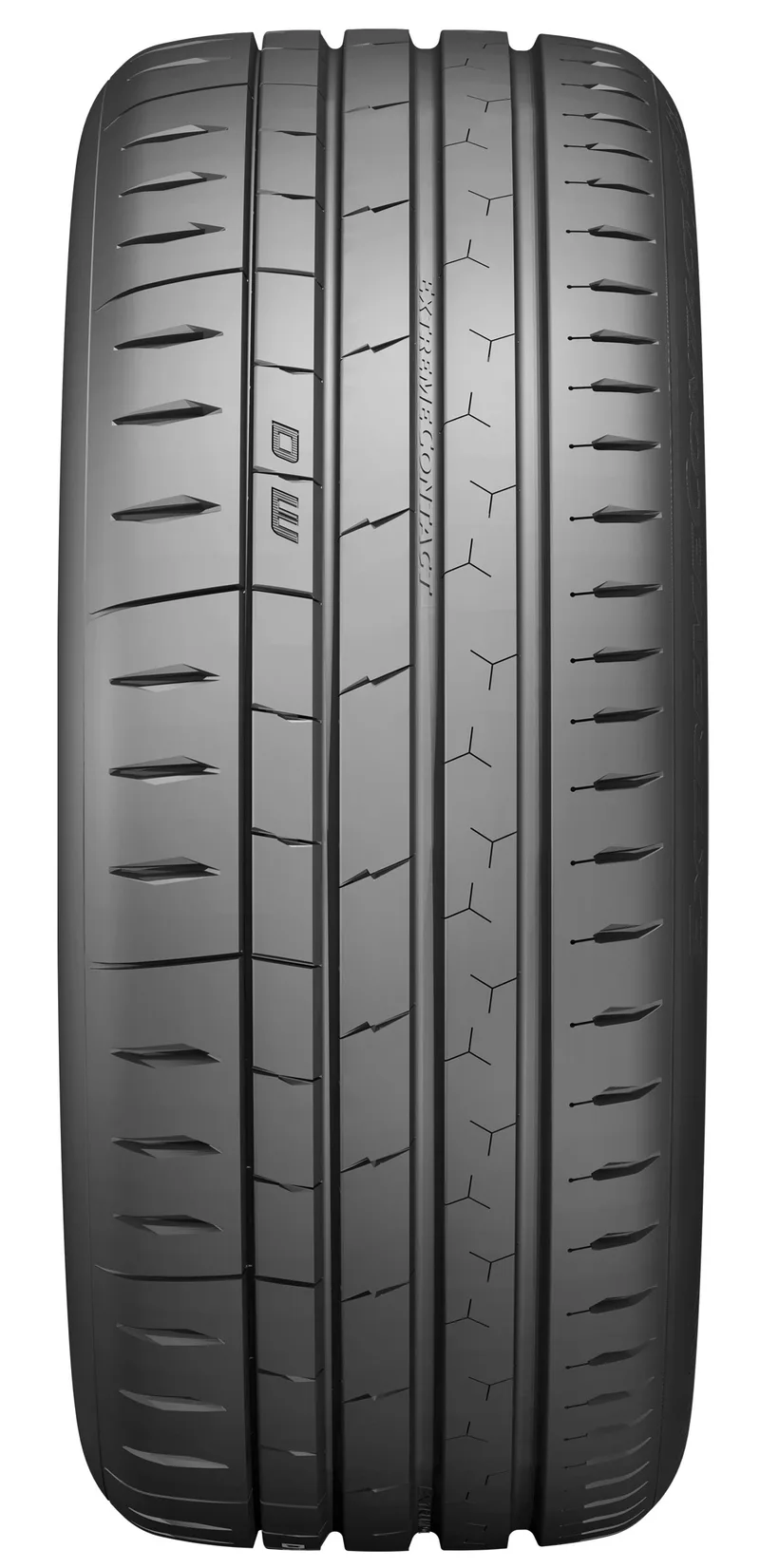
Tread-detail reference. Section width is calculated separately.
Product image: Continental Tire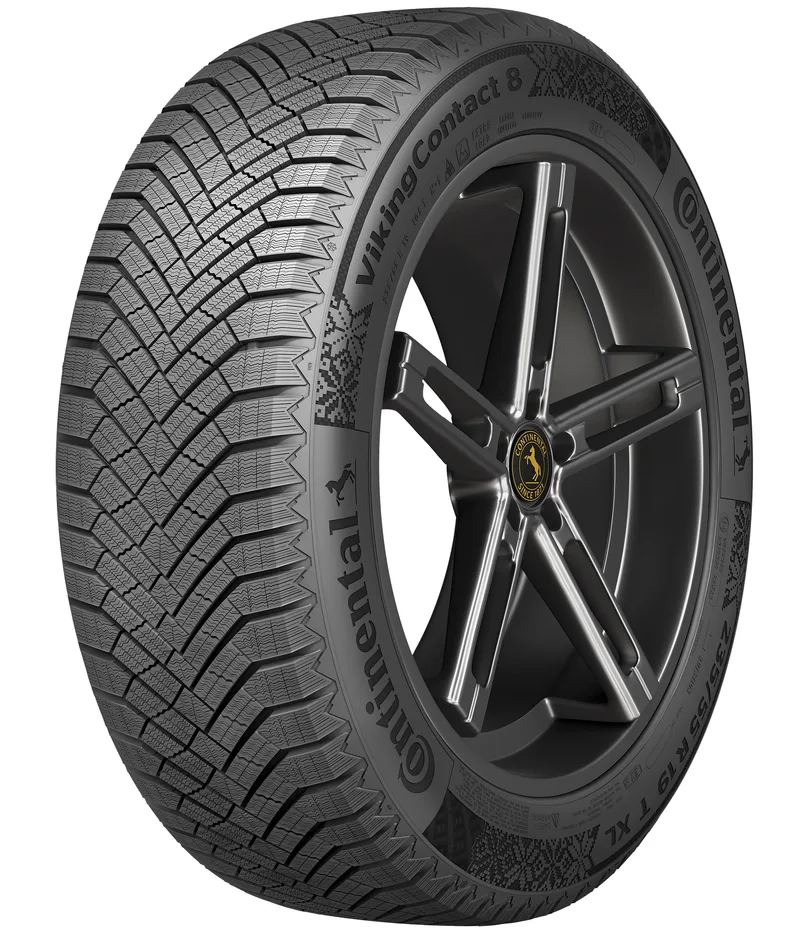
Reference image of a winter tread design.
Product image: Continental Tire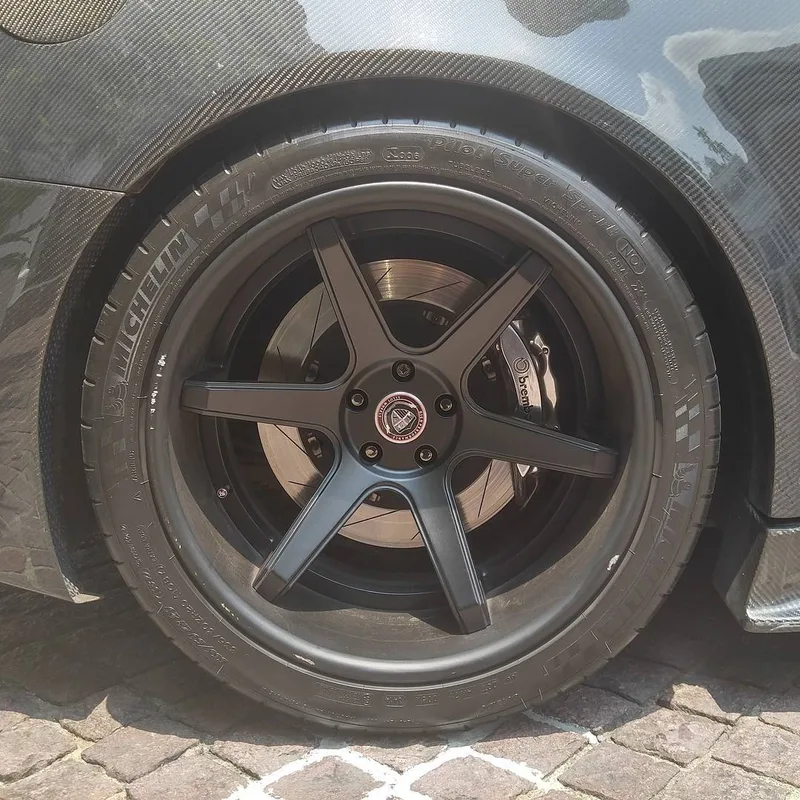
A fitted wheel showing spokes, brake disc and caliper.
A tire code gives you enough information to calculate its nominal geometry. Actual manufacturer dimensions can differ.
Enter the full size printed on each tire. Prefixes P and LT are accepted; load and speed ratings are separate.
Use the side and front views, dimension table and speedometer estimate to understand what changes.
Check the vehicle placard, the tire maker’s wheel-width range and clearance as the steering and suspension move.
Go straight to dimensions in inches and centimeters, with a diagram and nearby sizes.