Start with the sidewall
Enter the full size printed on each tire. Prefixes P and LT are accepted; load and speed ratings are separate.
Convert one tire size or compare two. See nominal dimensions and speedometer changes.
Both tires shown at the same scale. Nominal dimensions. Photorealistic illustration; tread and wheel design are generic.
Swipe the table to see every measurement and change.
| Measurement | A · 275/60R20 | B · 285/60R20 | Change |
|---|---|---|---|
| Overall diameter | 32.99 in83.80 cm | 33.46 in85.00 cm | +0.47 in+1.20 cm |
| Section width | 10.83 in27.50 cm | 11.22 in28.50 cm | +0.39 in+1.00 cm |
| Sidewall height | 6.50 in16.50 cm | 6.73 in17.10 cm | +0.24 in+0.60 cm |
| Circumference | 103.65 in263.27 cm | 105.13 in267.04 cm | +1.48 in+3.77 cm |
| Wheel diameter | 20.00 in50.80 cm | 20.00 in50.80 cm | 0.00 in0.00 cm |
| Revolutions / mi | 611.3 | 602.7 | -8.6 |
Assumes the speedometer was calibrated for the original tire. Real rolling circumference varies.
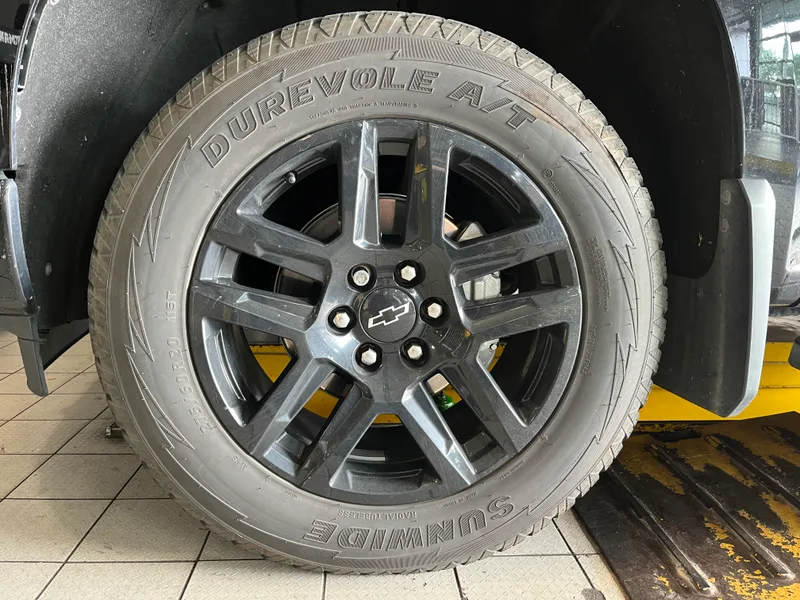
Installed 275/60R20 115T tire shown as a reference.
The size code gives the dimensions. These reference images show tread patterns, sidewall details and wheel designs.
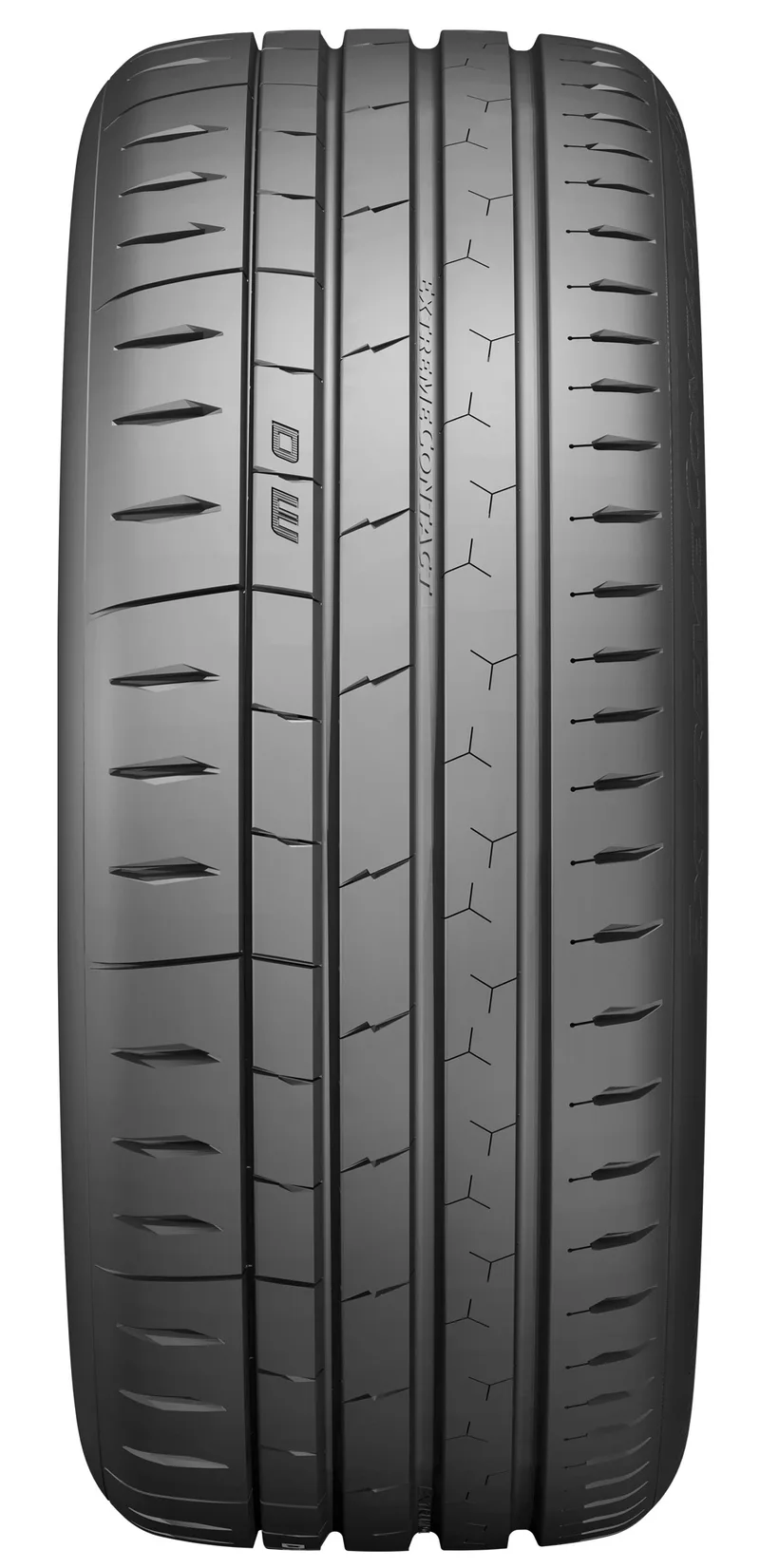
Tread-detail reference. Section width is calculated separately.
Product image: Continental Tire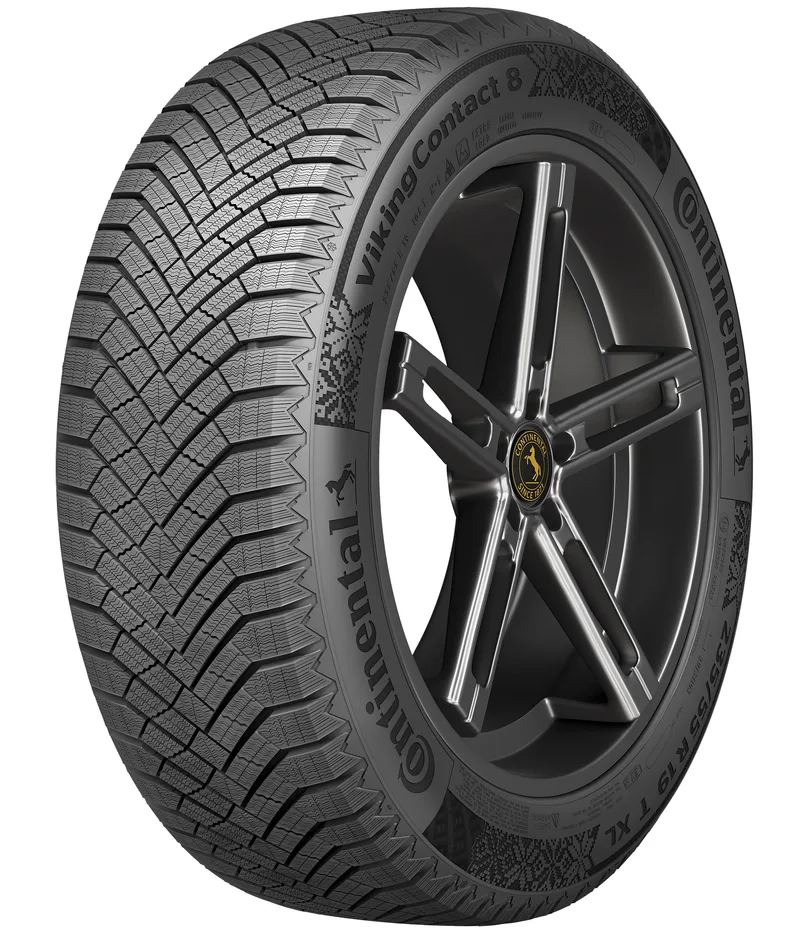
Reference image of a winter tread design.
Product image: Continental Tire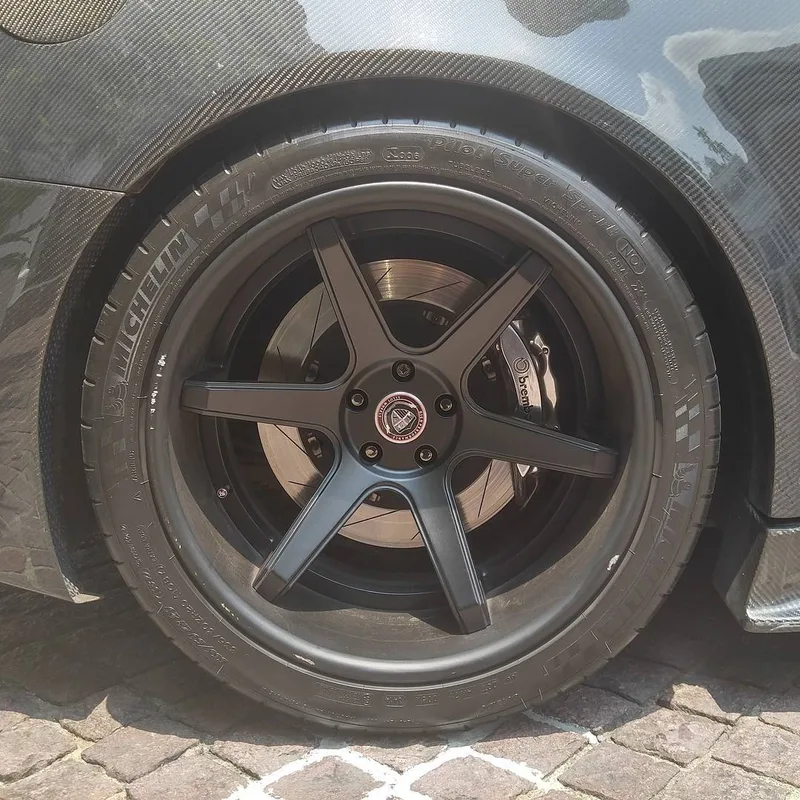
A fitted wheel showing spokes, brake disc and caliper.
A tire code gives you enough information to calculate its nominal geometry. Actual manufacturer dimensions can differ.
Enter the full size printed on each tire. Prefixes P and LT are accepted; load and speed ratings are separate.
Use the side and front views, dimension table and speedometer estimate to understand what changes.
Check the vehicle placard, the tire maker’s wheel-width range and clearance as the steering and suspension move.
Go straight to dimensions in inches and centimeters, with a diagram and nearby sizes.